

The Beauty of
Handwoven Furniture
A celebration of natural materials, intricate weaving, and the subtle variations that give handcrafted furniture its unmistakable character.
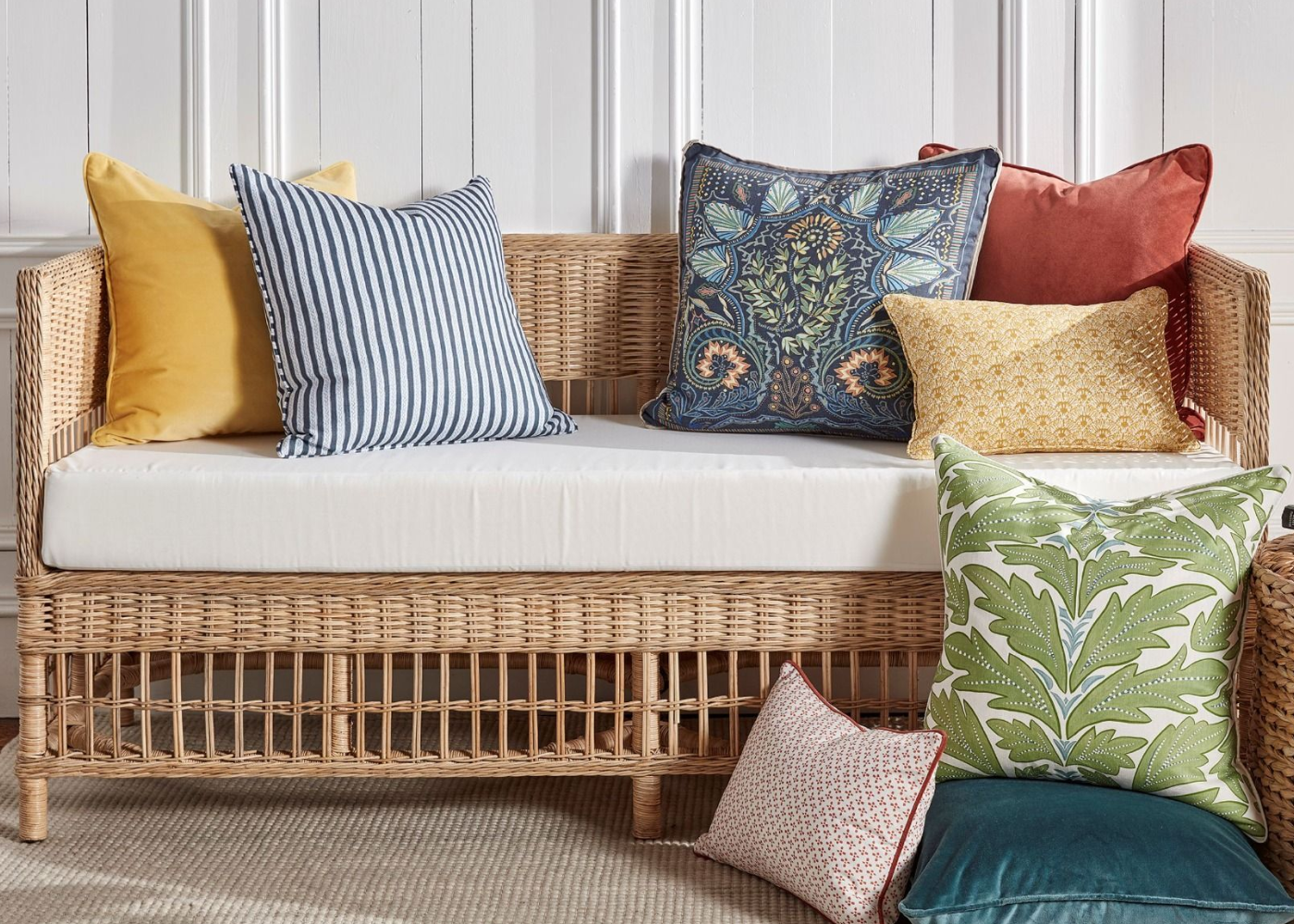
There is something unmistakable about a piece of furniture shaped by the human hand. Look closely and you begin to see it: the rhythm of the weave, the subtle variations in natural material, the carefully wrapped joints, and the small details that give each piece its own character.
Handwoven furniture brings a quality to a room that is difficult to reproduce through perfectly uniform production. It has texture, dimension, and a sense of movement. More importantly, it reveals something about how it was made.
At Memoire Design™, woven furniture is more than an aesthetic. It is part of a longstanding appreciation for craftsmanship, natural materials, and pieces designed to become part of a home.
From the curve of a rattan frame to the intricacy of a trellis pattern, every detail contributes to the story of the finished piece.
“ The beauty of handwoven furniture lies not
in perfect uniformity, but in its individuality. ”
Craftsmanship You Can See
In many forms of furniture making, construction is designed to disappear. With woven furniture, craftsmanship often becomes part of the decoration.
The weave is visible. Wrapped joints become architectural details. Changes in pattern create movement across the surface of a chair, table, basket, or accessory.
This visibility is part of what makes handwoven furniture so compelling. The process leaves its mark on the finished piece, allowing the way something is made to become part of how it is experienced.
The Character of Natural Rattan
Rattan is particularly suited to woven furniture because of its unique combination of strength and flexibility.
It can form the structural frame of a piece while also lending itself to intricate decorative details. Its natural texture brings warmth to a room, while its ability to curve and bend allows for silhouettes that can feel almost sculptural.
Because rattan is a natural material, no two sections are completely identical. Subtle differences in tone, markings, texture, and surface character are inherent to the material.
Rather than diminishing the design, those differences give natural rattan furniture much of its personality.
Variation Is Part
of the Story
Natural rattan is not intended to look perfectly uniform. Variations in color, texture, markings, and surface character are part of what distinguishes a natural material from a manufactured one.
The Art of the Weave
Wicker describes a technique rather than a material, and within that technique lies an extraordinary range of possibilities.
A weave can be dense and tailored, open and architectural, intricate and decorative, or deliberately simple. The pattern can follow the silhouette of a piece or become a focal point of its own.
Changes in spacing and direction create light and shadow. Open weaving can make substantial furniture feel visually lighter, while tighter patterns introduce richness and depth.
In the most successful pieces, the weave is not applied decoration. It is fundamental to the design.
Learn More: Rattan vs. Wicker →The Human Hand Makes a Difference
Handcrafted furniture carries subtle evidence of the person who made it.
Natural material must be worked with rather than simply processed. Curves, joints, and woven details require attention to the character of the material itself.
The result is not mechanical repetition. It is consistency with individuality.
Two pieces of the same design should clearly belong together, but natural variation and hand-finished details may prevent them from being exact replicas of one another.
That distinction is one of the qualities that makes handcrafted furniture feel alive within an interior.
Consistency With
Individuality
The goal of craftsmanship is not to erase every sign of the natural material or the hand that worked with it. Those subtle distinctions are precisely what give handcrafted pieces their character.
Texture Changes a Room
One of the reasons woven furniture remains so enduring is its ability to add visual richness without relying entirely on color or pattern.
Rattan brings texture into a room through the material itself. The surface catches light differently than polished wood, smooth stone, or upholstery. The weave creates shadows. Natural variation adds depth.
In a neutral interior, these qualities can prevent the room from feeling flat. In a colorful or heavily patterned space, natural woven texture can provide balance.
It is a material that contributes to a room without necessarily demanding attention.
Beautiful From Every Angle
Woven furniture has a particularly sculptural quality because so much of its construction remains visible.
The back of a chair can be as interesting as the front. Wrapped joints create rhythm along a frame. Open weaving allows light to pass through the furniture, changing its appearance throughout the day.
This makes woven furniture especially effective in spaces where pieces are viewed from multiple directions.
A dining chair pulled away from a table, a lounge chair floating within a room, or a game table positioned at the center of a space can contribute to the interior almost like a piece of sculpture.
Tradition Without Feeling Traditional
Woven furniture has a long design history, but that does not mean it must feel rooted in the past.
The character of a woven piece changes dramatically through proportion, silhouette, pattern, and finish. A familiar technique can become something entirely different when interpreted through a new shape or scale.
That ability to evolve is one reason rattan and wicker continue to appear in interiors of nearly every style.
Handwoven furniture can sit comfortably beside antiques and traditional upholstery, but it can just as easily introduce warmth to contemporary architecture or soften a more minimal room.
Details Worth
Noticing
The Weave
Notice pattern, spacing, direction, and how the weave relates to the silhouette.
The Joints
Wrapped connections can become an intentional part of the finished design.
The Material
Natural variation in tone and texture gives rattan its individual character.
The Curves
Rattan’s flexibility allows frames to become expressive and sculptural.
The Finish
Natural, stained, or painted finishes can completely change the personality of a piece.
The Variation
Small differences remind us that natural, handcrafted pieces are not machine-made replicas.
Made to Be Lived With
The beauty of handwoven furniture is not meant to be appreciated only from a distance.
Furniture becomes part of daily life. Dining chairs gather around the table. Lounge chairs become favorite places to sit. Game tables bring people together. Baskets hold the things that make a home function.
Over time, beautifully made objects become familiar. They move from being new additions to becoming part of the visual memory of a home.
This is where craftsmanship and design ultimately find their purpose: not simply in how a piece looks, but in how beautifully it becomes part of the way we live.
The Enduring Appeal of the Handmade
In a world increasingly defined by speed and uniformity, there is something meaningful about furniture that still celebrates material, process, and craftsmanship.
Handwoven furniture asks us to notice the details: the intersection of two strands, the curve of a frame, the texture of natural rattan, and the subtle variations that make one piece slightly different from another.
Those details are not imperfections to eliminate. They are part of the beauty.
And perhaps that is why woven furniture continues to endure. It brings the human hand into the home in a way that can be seen, felt, and lived with.
Designed to inspire, crafted to endure.
The Art of
Woven Design
Explore furniture shaped by natural texture, thoughtful details, and a longstanding appreciation for the beauty of woven craftsmanship.
Explore Woven Furniture →