

The Garden Room
Returns
Part indoors, part out, and entirely its own, the garden room is finding its place in the home again. We explore the enduring appeal of rooms designed to live beautifully alongside nature.
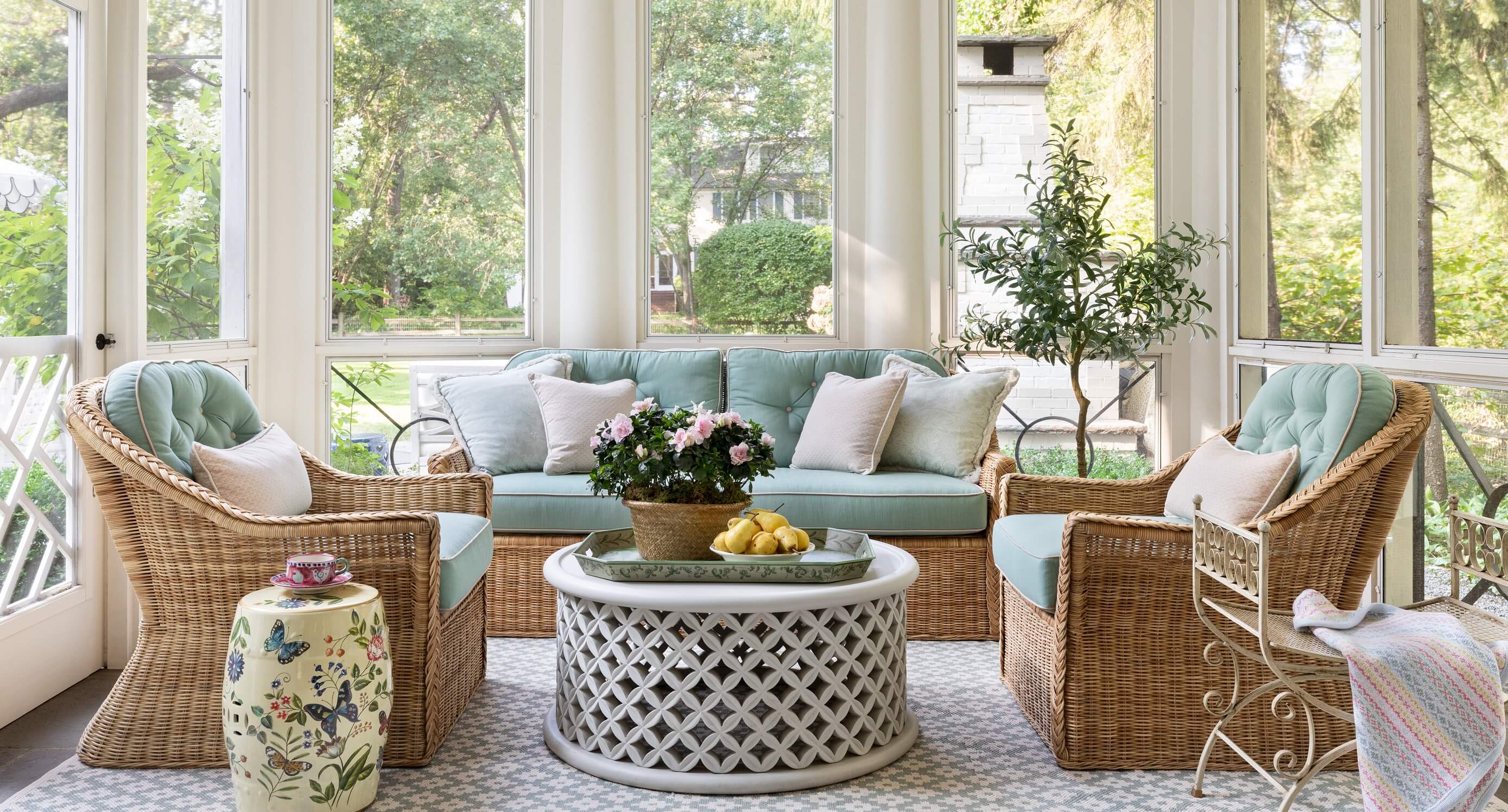
There has always been something irresistible about a room that cannot quite decide whether it belongs inside or out.
Filled with sunlight, surrounded by greenery, and furnished with pieces that feel equally at home in a garden or a beautifully layered interior, the garden room occupies a special place in the house.
Conservatories, sunrooms, enclosed porches, and glass-walled additions have taken many forms over the years. Yet the idea behind them remains remarkably consistent: create a room that brings us closer to nature without leaving the comforts of home behind.
Today, that idea feels especially relevant. As the boundaries between indoor and outdoor living continue to soften, the garden room is returning, not as a relic of another era, but as one of the most appealing rooms in the modern home.
“ The garden room belongs to the house,
but takes its cues from the garden. ”
Neither Completely Inside Nor Out
The magic of a garden room begins with its relationship to the outdoors.
Large windows, French doors, glass walls, and views into the landscape allow the garden to become part of the room itself. Sunlight changes the space throughout the day, while plants, trees, and changing seasons provide an ever-evolving backdrop.
This connection influences how the room should be furnished as well. Pieces that might feel particularly relaxed elsewhere in the house seem completely natural here. Woven furniture, botanical textiles, painted finishes, baskets, and natural materials all bridge the visual distance between interior and garden.
The result is a room that feels less decorated and more discovered.
The Return of the Garden Room
Our relationship with outdoor living has changed.
Porches are treated as true living spaces. Terraces have become extensions of dining rooms. Outdoor furniture is selected with the same consideration once reserved for interiors.
The renewed interest in garden rooms feels like a natural continuation of that shift.
These spaces offer the best qualities of indoor-outdoor living without requiring a particular architectural style. A garden room might be a formal conservatory, a screened porch, a sunny breakfast room, or simply a corner of the house with large windows and an abundance of plants.
What defines it is not the architecture alone. It is the feeling of being connected to the landscape.
Less Conservatory.
More Way of Living.
A garden room does not require glass walls or grand architecture. Sunlight, natural materials, woven furniture, greenery, and a strong connection to the outdoors can create the feeling almost anywhere.
Why Rattan Belongs Here
Few materials feel more at home in a garden room than rattan.
Its natural texture creates an immediate connection to the landscape, while its sculptural possibilities allow it to work in rooms ranging from traditional to contemporary.
Woven furniture also provides an important visual counterpoint to the harder architectural surfaces often found in these spaces. Glass, stone, tile, and painted millwork become warmer when balanced by natural fibers and handwoven texture.
A woven lounge chair can soften a formal conservatory. Rattan dining chairs can give a breakfast room an effortless quality. A woven side table or basket can introduce just enough texture without changing the character of the entire room.
The goal is not to make the room feel rustic. It is to make it feel connected.
Borrow From the View
A garden room already has a color palette. Look outside.
Greens are the obvious starting point, but the landscape offers far more than one color. Bark, stone, sky, flowers, weathered wood, terracotta, and changing foliage all provide inspiration.
The most successful palettes often allow these outdoor colors to enter the room subtly rather than literally. A soft blue cushion can echo the sky. A mossy green painted piece can relate to foliage. Natural rattan introduces the warm neutral tones of the landscape.
White and cream remain particularly effective in garden rooms because they reflect light and allow greenery outside the windows to become the strongest color in the space.
Colors Borrowed
From Nature
Natural Rattan
Warm, organic, and quietly textural.
Garden Green
Inspired by leaves, herbs, and clipped hedges.
Soft Blue
A subtle reference to open sky.
Warm White
A quiet backdrop for natural texture and greenery.
Mix Indoor Polish With Outdoor Ease
The most interesting garden rooms resist being furnished entirely like either an interior room or an outdoor space.
Instead, borrow from both.
Pair woven chairs with an upholstered sofa. Place a garden-inspired table beside a more traditional piece. Mix botanical prints with simple linen. Introduce ceramics, books, art, and decorative objects alongside baskets and greenery.
This tension between refinement and informality is precisely what makes the garden room compelling.
Nothing should feel too precious, but the room should still feel considered.
The Garden Room
Formula
Begin with rattan, wicker, or woven details.
Allow plants and the landscape to participate.
Balance woven texture with comfortable textiles.
Borrow greens, blues, and neutrals from outside.
Introduce antiques, books, art, or objects with history.
Keep the arrangement comfortable and conversational.
Bring in Something Living
No garden room feels complete without something growing.
Plants soften architecture in much the same way woven furniture does. They introduce movement, irregularity, and life into rooms that might otherwise feel too formal.
Rather than filling every available surface, consider scale. One substantial potted tree can have more impact than a collection of small plants. A climbing vine, an oversized fern, or a simple arrangement of branches can create a strong relationship with the landscape beyond the windows.
Flowers can change with the season, allowing the room to evolve throughout the year.
A Room That Changes
With the Seasons
Morning light, summer greenery, autumn branches, winter sun: when the landscape becomes part of the interior, the room is never quite the same twice.
You Don't Need a Garden Room to Create One
Perhaps the most appealing thing about the return of the garden room is that the idea can extend far beyond a traditional conservatory.
A sunny breakfast room can become a garden room. So can an enclosed porch, a corner overlooking the backyard, a dining room with French doors, or a small sitting area beside a window.
Begin with the relationship to the outdoors. Arrange furniture toward the view rather than away from it. Introduce natural texture. Bring in plants. Choose fabrics and colors that feel comfortable beside the landscape.
Sometimes creating a garden room is simply a matter of deciding that the garden deserves a place in the house.
The Garden Room, Reimagined
Design has a way of returning to ideas that were good all along.
The garden room is one of them.
Its renewed appeal has less to do with nostalgia than with the way we want to live now: comfortably, naturally, and with fewer boundaries between the rooms we inhabit and the world just outside them.
Rattan, greenery, sunlight, beautiful textiles, and collected objects give these spaces their character, but their true appeal is simpler.
A garden room gives us a reason to sit near the window, notice the season, open the doors, and stay awhile.
Perhaps the garden was always meant to come inside.
Bring the Garden
Inside
Discover woven furniture and garden-inspired pieces designed to bring natural texture, graceful silhouettes, and the spirit of outdoor living into the home.
Explore Woven Furniture →